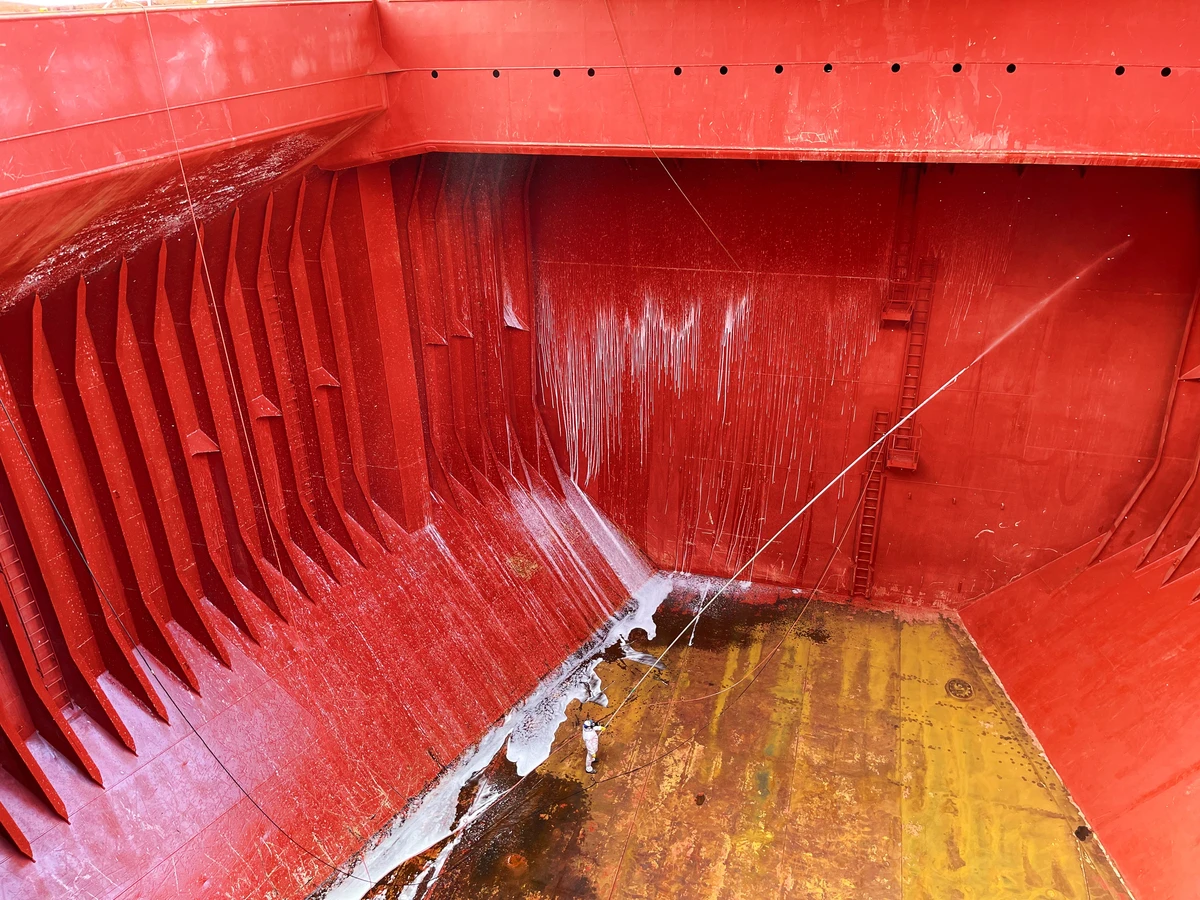
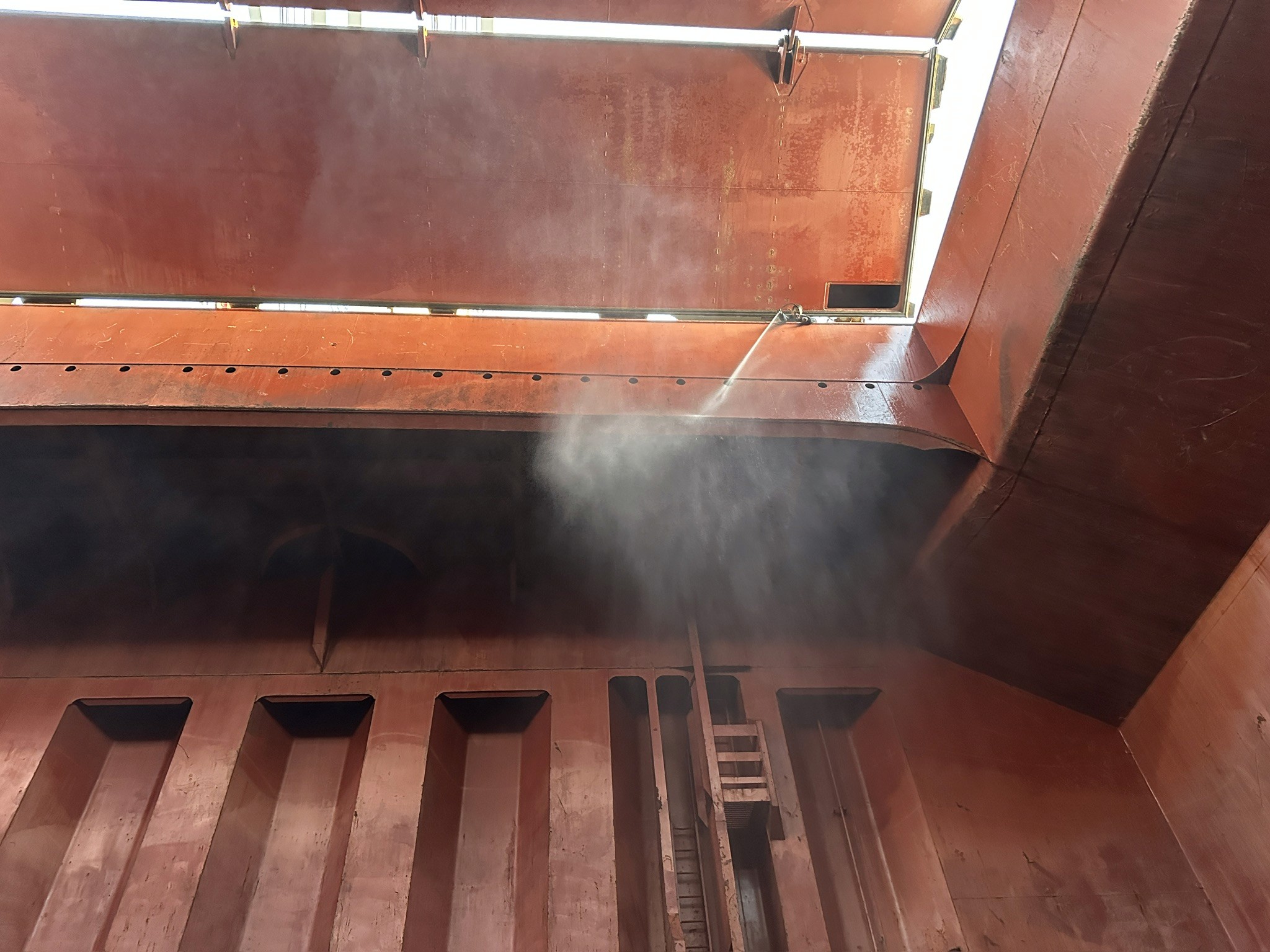
A cargo hold may appear clean after high-pressure washing and chemical treatment, yet still display dark marks left by a previous coal cargo. For the shipowner preparing to load grain, this raises a critical question: does the hold need further cleaning, coating repairs, or repainting — or is the remaining discoloration merely cosmetic?
The answer can affect the vessel's readiness for inspection, the scope of additional work and the time required before loading.
A stained coating is not automatically contaminated. Conversely, an apparently clean surface may still contain transferable carbon residue, unstable paint or loose rust that could compromise the intended cargo.
Understanding this difference is essential when preparing bulk carriers for grain loading after transporting coal, petcoke or other dirty cargoes.
Coal Residue, Permanent Staining and Coating Damage: Three Different Conditions
Not every dark mark inside a cargo hold has the same cause or requires the same corrective action.
1. Transferable coal residue
Coal dust or adherent carbon deposits may remain on tank tops, bulkheads, frames, ladders and sheltered structural areas.
If particles or deposits can be transferred from a hold surface to a cloth, inspection tool or the next cargo, the condition is a potential contamination concern.
Further cleaning is normally required within the applicable acceptance standard.
2. Permanent coating discoloration
Some previous cargoes may leave visual discoloration that does not transfer readily after appropriate cleaning.
A permanently discolored but otherwise sound coating is not necessarily equivalent to the presence of previous cargo residue.
The practical question is whether the surface remains stable, clean, dry, odor-free and acceptable under the actual cargo and inspection requirements.
Color alone should not be used as the sole basis for deciding that an entire hold must be repainted.
3. Deteriorated or damaged coating
Cargo-handling equipment, abrasive materials, corrosion and mechanical impacts can compromise the integrity of existing paint.
Scratches, blistering, flaking, poor adhesion and exposed steel require a different assessment from ordinary contamination removal.
Where coating deterioration is present, additional surface preparation, localized repair or broader recoating may be necessary.
Cleaning removes contamination. Coating repair addresses deterioration of the protective paint system. These are related but distinct scopes of work.
Why Coal-to-Grain Cargo Transitions Require Particular Attention
Coal can leave fine dust and, depending on its characteristics, persistent deposits on cargo hold surfaces.
During discharge, cargo movement and handling equipment may also expose existing coating defects or cause additional surface damage.
When the vessel's next assignment involves soybeans, wheat, corn or another grain cargo, the required hold condition must be assessed against the charterparty, cargo instructions and the nominated inspecting party's criteria.
Industry loss-prevention guidance emphasizes the removal of previous cargo residues, transferable contamination, loose rust scale, loose paint, moisture and objectionable odors.
The West of England P&I Club's cargo hold cleaning guidance specifically discusses the attention given to coal and petcoke staining, including the possibility of coating blistering and contamination during subsequent operations.
For the vessel operator, this means that inspection readiness cannot be established merely by confirming that the last washing cycle has ended.
The condition of the underlying coating also matters.
A Practical Decision Framework: Clean, Re-Clean or Repaint?
Before authorizing additional work, the Master, vessel operator and relevant technical personnel should distinguish between the observed defect and the remedy.
Observed condition | Technical consideration | Possible response |
|---|---|---|
Loose black dust or transferable deposits | Previous cargo contamination | Further targeted cleaning |
Adherent oily film | Residue not adequately removed | Compatible cleaning treatment and rinsing |
Stable discoloration without transferable material | Cosmetic staining versus actual contamination | Document condition and confirm inspection criteria |
Loose paint or rust scale | Unstable surface material | Removal and assessment of coating repair |
Scratched or deteriorated coating | Protective system may be compromised | Localized or extensive coating repair assessment |
Fresh paint with remaining odor or incomplete cure | Potential cargo taint or coating damage | Defer loading until approved curing requirements are satisfied |
This framework is intended to support technical decisions, not replace a competent surveyor's findings or the coating manufacturer's instructions.
The importance of checking transferability
A controlled examination of representative affected areas can help distinguish loose contamination from stable discoloration.
The examination should be performed using methods that will not damage the coating, with the results documented.
A dry-cloth transfer observation may reveal remaining dust or carbon particles. However, a single informal wipe test does not establish the suitability of an entire cargo hold for loading.
The ultimate assessment must consider the required cleanliness standard, accessible surfaces, coating stability and all other relevant inspection criteria.
When Is Repainting Justified?
Repainting may be technically or commercially justified when cleaning alone cannot address the actual condition of the surface.
Examples include:
Significant areas of deteriorated, detached or blistered coating.
Scratched coating requiring protective restoration.
Existing paint whose condition is unsuitable for the next cargo.
Persistent surface conditions that cannot be resolved through an appropriate cleaning process and require an agreed coating intervention.
A specific contractual or technical requirement for a higher standard of coating condition.
However, repainting solely to conceal previous cargo residue is not an acceptable substitute for cleaning.
Contaminated or improperly prepared surfaces should not simply be painted over.
A successful coating intervention requires appropriate surface preparation, verified compatibility with the existing system, suitable environmental conditions and compliance with the manufacturer's application and curing instructions.
The vessel's planned loading window must also accommodate the required drying and curing period.
The Hidden Risk of Painting Too Close to Grain Loading
Applying fresh paint shortly before a cargo inspection can create a new problem even when the original staining has been addressed.
Depending on the coating system and environmental conditions, newly applied paint may require significant time to cure properly.
Incomplete curing, residual solvent odors and inadequate ventilation can affect cargo suitability and inspection outcomes.
A coating that appears dry to the touch is not necessarily ready for cargo exposure.
Before authorizing repainting, the responsible technical personnel should confirm:
Compatibility of the coating system with the intended cargo.
Required surface preparation and condition of the existing coating.
Application temperature, humidity and dew-point limitations.
Manufacturer-defined overcoating and curing intervals.
Ventilation and applicable enclosed-space safety controls.
Required inspection and coating quality records.
The earliest acceptable loading time under the approved coating specification.
The UK P&I Club's hold preparation guidance identifies paint odor and coating defects among potential reasons for rejection at hold inspection.
Repainting must therefore be planned as a separate technical operation, not an automatic final step in cargo hold cleaning.
Real Operation in Brazil: M/V QUEEN SARAH
Seachios® Marine Services has documented a relevant coal-to-grain operation involving the M/V QUEEN SARAH, associated with Reederei Nord Group.
The vessel underwent cargo hold cleaning at Pecém, Brazil, following carriage of coal, before proceeding to Vila do Conde for its next grain-loading assignment.
Pecém: Cleaning following coal discharge
According to the published Seachios operational record, the cleaning phase took place between 22 and 27 July 2023.
The scope included high-pressure water jetting and chemical cleaning using marine cleaning products, followed by rinsing and inspection.
During the operation, the team identified persistent dark staining associated with areas affected during coal discharge.
Even after the cleaning treatment, portions of the existing surfaces retained bonded discoloration.
Vila do Conde: A separate coating decision
Following inspection and review of the condition, the shipowner elected to proceed with repainting at Vila do Conde.
The coating work was documented for 27–29 July 2023, involving surface preparation and coating application under the applicable technical requirements.
The published case records the owner's decision to restore the visual finish and coating protection ahead of the intended grain cargo.
This distinction is essential: the case does not establish that every coal-stained hold requires repainting. It illustrates a vessel-specific decision made after cleaning revealed the condition of the underlying surfaces.
Read the complete M/V QUEEN SARAH operation.
How Shipowners Can Avoid Unnecessary Repainting
The most effective approach begins before an urgent coating decision becomes necessary.
Inspect the holds after discharge
Obtain photographs of tank tops, side shell plating, transverse bulkheads, upper structures, ladders and previous damage areas.
Identify whether the issue is loose material, persistent residue, coating discoloration or actual coating failure.
Define the required grain-readiness condition
Review the charterparty, voyage instructions and nominated surveyor's requirements.
Do not assume that every grain cargo requires a fully renewed paint system.
Separate cleaning deficiencies from coating deficiencies
A cleaning contractor should report material that remains within the cleaning scope and distinguish it from defects requiring technical repair.
Where necessary, request a coating-condition assessment before commissioning painting.
Allow sufficient time for the selected remedy
Further chemical cleaning, localized coating repairs and extensive repainting may have very different resource, access and schedule requirements.
Curing time can become a significant constraint when the vessel is approaching its next loading window.
Document the result
Maintain appropriate before-and-after photographs, cleaning records, coating information where applicable, and inspection findings.
The documentation should identify what was performed and what was actually accepted by the relevant parties.
For guidance on specifying these requirements commercially, see Cargo Hold Cleaning RFQ in Brazil: Scope, Costs & Surveyor Acceptance.
Frequently Asked Questions
Does a coal-stained cargo hold always need repainting before loading grain?
No. The need for repainting depends on whether the mark is transferable contamination, stable discoloration or evidence of coating deterioration, together with the contractual and inspection requirements for the intended cargo.
Can a cargo hold pass inspection with permanent discoloration?
Potentially. Stable discoloration may be treated differently from cargo residue or coating defects. Acceptance depends on the actual condition, required cleanliness standard and inspecting party's findings.
Can high-pressure cleaning damage cargo hold coatings?
Yes. Inappropriate pressure, nozzle selection, working distance or cleaning technique can damage vulnerable coatings. The method must be selected with regard to the coating condition and relevant technical requirements.
Is repainting included in a standard cargo hold cleaning quotation?
Not automatically. Surface preparation, coating repair and repainting should be expressly included in the agreed scope or separately authorized.
Can grain be loaded immediately after repainting?
Not necessarily. The coating must meet the manufacturer's applicable curing and cargo-service requirements, including relevant ventilation, dryness and odor considerations.
Who decides whether the holds are acceptable for loading?
The decision follows the applicable charterparty, cargo instructions and inspection arrangements. The Master and vessel personnel have important responsibilities, while the nominated inspector or other designated party may determine acceptance under the agreed requirements.
Cargo Hold Cleaning and Technical Assessment in Brazil
For a bulk carrier preparing to load grain after coal, petcoke or another contaminating cargo, the right technical decision begins with a clear assessment of the hold's actual condition.
Seachios® Marine Services supports cargo hold cleaning operations in Brazilian ports, including chemical treatment, high-pressure washing, manual cleaning and operational documentation within the agreed scope.
Where coating defects or additional treatment requirements are identified, these must be assessed and addressed separately under the appropriate technical and commercial arrangements.
Explore Cargo Hold Cleaning Services in Brazil
Request a Technical and Commercial Assessment
Email: operations@seachiosbrazil.com
Technical References
Technical note: Cleaning, inspection and coating requirements vary according to vessel condition, cargo, contractual obligations, location and the relevant manufacturer's specifications. The M/V QUEEN SARAH case is a documented historical operation and does not establish a universal cleaning or repainting requirement.
About author
The Seachios® Media & Press Team ensures consistent and authoritative communication across the maritime and industrial sectors. Managing press relations, official statements, and technical publications, the team strengthens the company’s reputation and reinforces its commitment to clients and partners worldwide.

Seachios® Media & Press Team
Corporate Communications
Subscribe to our newsletter
Sign up to get the most recent blog articles in your email every week.